
Books, Briefly
A First-Half Reading List
Dear Reader,
As the new format around here calls for a grab bag, here’s one: ten books from the first half of 2026 (not including the Book Club books), with a paragraph’s worth of honest review of each. Some were chosen by circumstance (ordination/sermon prep requires certain reading that may or may not apply or appeal); others by curiosity. A few really delivered; one didn’t. Draw your own conclusions.
This morning, I’m heading to Louisville for the PCA’s General Assembly. Megan has pre-gamed a carload of sewing projects for the trip, and our youngest, Millie, is flying in from Virginia to spend the week with us (including a few days back in Illinois). I’m looking forward to getting some time with her before she and husband/Marine Corps officer Luke report to Quantico beginning of August.
I figure there may be a few in my readership also making the trip to GA, or perhaps watching proceedings online (always riveting viewing). Maybe I’ll see you in the Land of the Khaki pants. To be sure, I’ll be by the book table at some point.
Craig
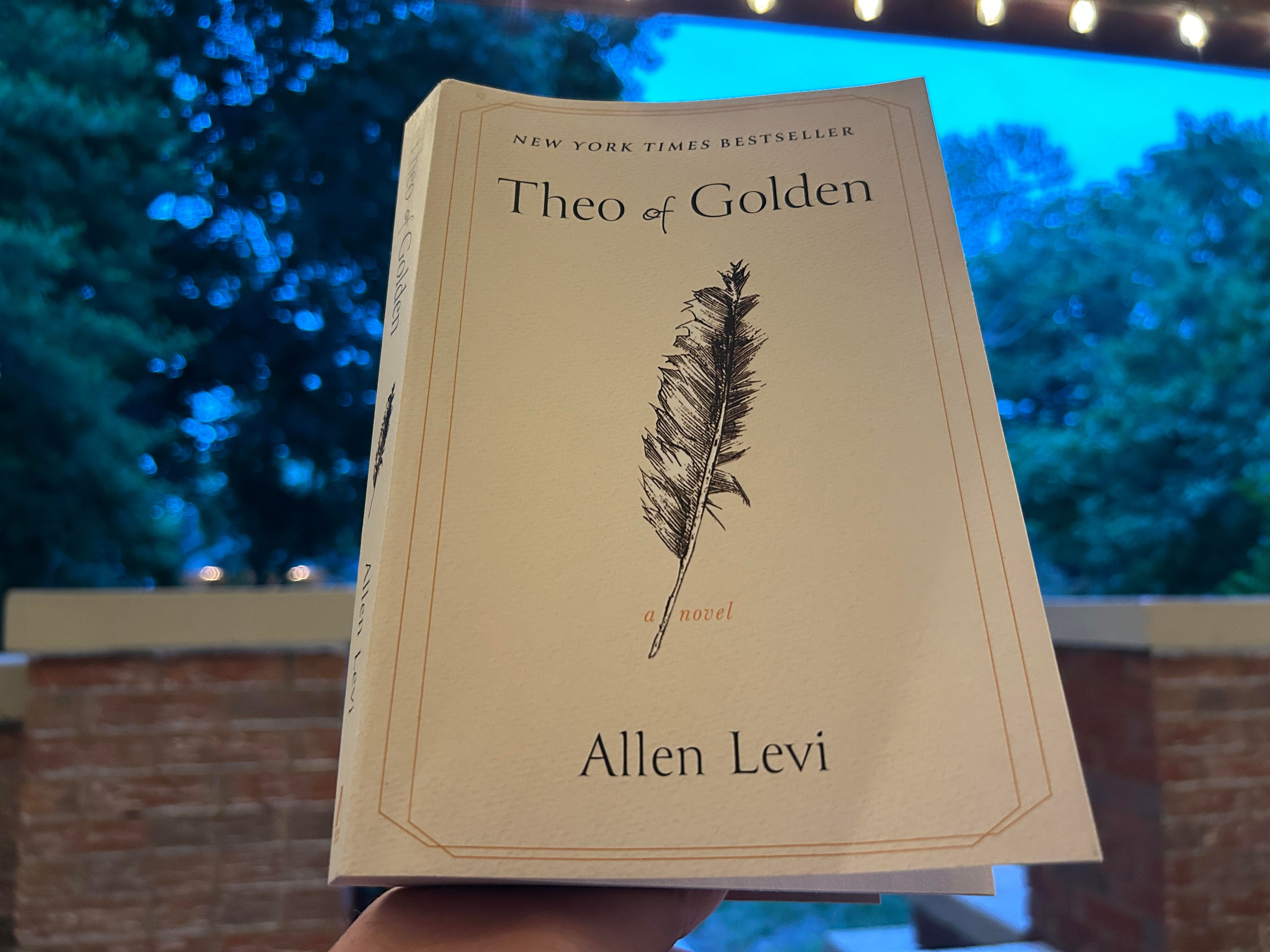
PS: If you’re looking for a good old-fashioned summer read, Allen Levi’s Theo of Golden would be my recommendation (see review below). Feel free to share your own recommendations in the comments below.
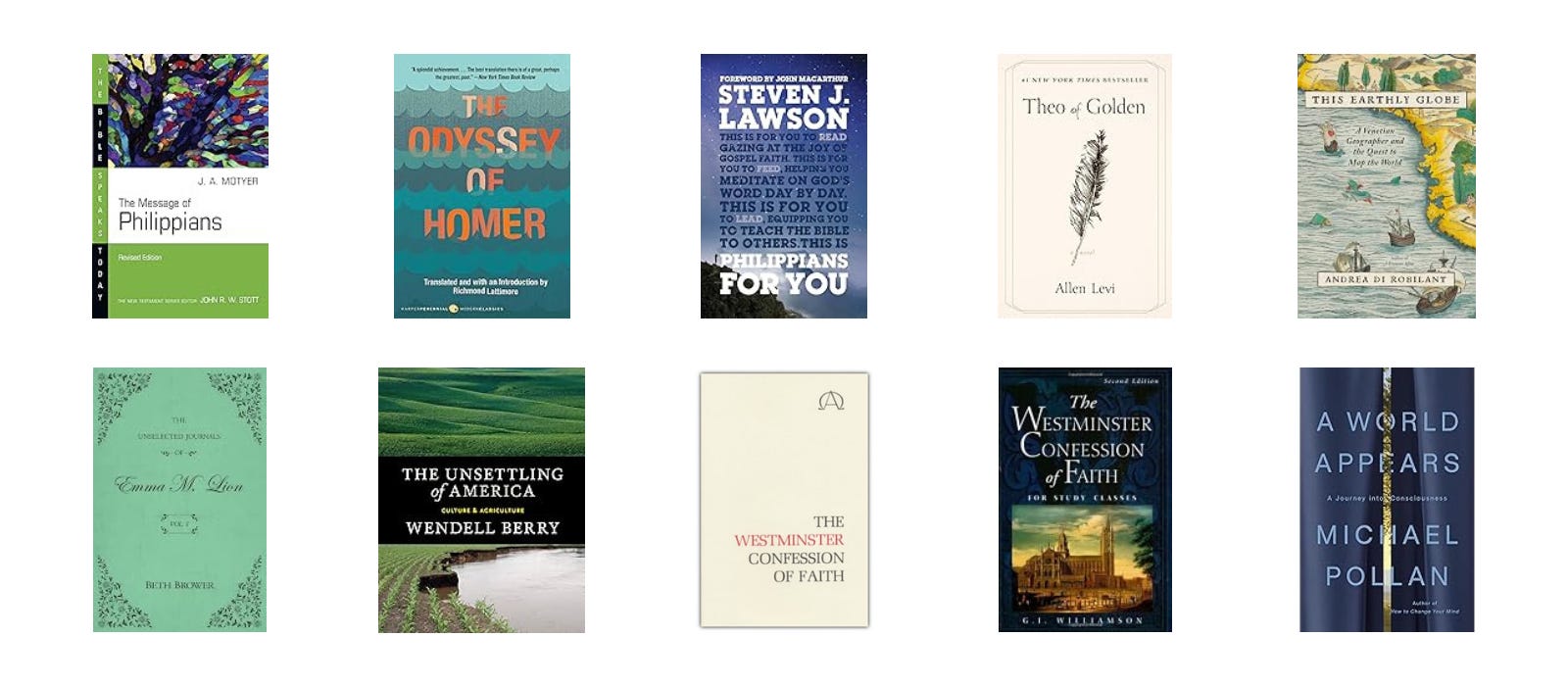
The Message of Philippians by J.A. Motyer — Worked through this as part of my preparation for our Philippians sermon series from January through May. Motyer is a reliable guide who neither talks down to the layman nor loses him in the weeds, which is a harder balance to strike than most commentators manage.
The Odyssey of Homer translated by Richmond Lattimore — Started this in March in anticipation of Christopher Nolan’s upcoming film. Lattimore stays structurally close to the ancient Greek text, which makes it the more scholarly choice but occasionally the duller read compared to Fagles’ more dynamic translation. (Not pursuing Emily Wilson’s 2017 version, which is what Nolan based his film on; early trailers with “dad” and “let’s go” haven’t changed my mind, nor has the swirl of feminist perspectives praising its political correctness.)
Philippians for You: Shine with Joy as You Live by Faith by Stephen J. Lawson — The For You commentary series is a reliable one, offering practical insight without losing the text. Worked through this alongside Motyer for Philippians prep. Worth knowing that Lawson’s recent public moral failures have resulted in the publisher pulling the book, but the commentary itself is still good.
Theo of Golden by Allen Levi — Started seeing this 2023 debut novel circulating among friends and finally picked it up. Now I understand why it’s gaining traction: well-developed characters, writing that earns its descriptions, and a redemption arc that doesn’t cheat. This one delivers what it promises.
This Earthly Globe: A Venetian Geographer and the Quest to Map the World by Andrea Di Robilant — Still working through this one slowly, which is fitting given the scale of its subject. The geography major in me appreciates the scope of Di Robilant’s project, tracking the obsessive effort to chart a world refusing to hold still. So many players makes it hard to keep track of everyone, though.
The Unselected Journals of Emma M. Lion by Beth Brower — Listened to the first two volumes of this wonderfully written late-1800s series following a young Englishwoman making her way in the world. Best comparison I can offer: if Anne of Green Gables were British and in her twenties, she’d be Emma M. Lion. High praise, meant sincerely (especially since my wife loves both Anne and Emma).
The Unsettling of America by Wendell Berry — One of Berry’s earliest and most damning nonfiction works, pulling back the curtain on how mid-20th century agribusiness dismantled the culture of traditional American farming. I dog-eared nearly every page. Berry was writing prophecy in 1977; we’ve just been living out the fulfillment ever since.
Westminster Confession of Faith by the Westminster Divines — One of the most succinct, important summaries of Reformed theology produced. Taught the full Confession to two different groups from January through June and was reminded again why it has lasted: it says much in little, and trusts the reader to do the rest.
Westminster Confession of Faith: for Study Classes by G.I. Williamson — Read this alongside the Confession for teaching prep. Wonderfully organized in walking the line between healthy confessional confidence and annoying cage-stage certainty with more grace than most. A solid thinker and an elegant writer.
A World Appears: A Journey into Consciousness by Michael Pollan — Came to this one with genuine hope to learn more about what consciousness is, where it comes from, and how it makes us, us. Pollan is a good writer, but the subject ultimately outran him. He essentially gives up, finishing with more questions than answers and reminding us again that there are still mysteries in the world.
"Some books are to be tasted, others to be swallowed, and some few to be chewed and digested." — Francis Bacon

Craig, you are the second person in a week that has mentioned Theo of Golden. I think I might try to read that one in the near future. Thanks for the reviews, and have a safe trip!
To throw in a pitch for a book Craig assigned for the Book Club, Hannah Coulter has caused me to reflect even more deeply on how I spend my time and attention. I feel like a better person having read the book. We get easily distracted by what doesn't matter in today's world. Hannah Coulter is about what truly matters.