
When Truth Stumbles
Lethal Force, Narrative War, and the Minneapolis Unraveling
Dear Reader,
This Friday’s Second Drafts is a special one-topic-only edition, prompted in part by a conversation with my wife, Megan. When something in the world feels consequential, she has a way of cutting through my internal hesitation and providing direction and motivation. As I recall, that discussion went like this:
“You need to write about Minneapolis.”
And she was right. I did.
What follows is an attempt to make sense of a confusing and frustrating situation marked by loss of life, competing narratives, and a troubling erosion of trust, hopefully without adding to the noise or accelerating the chaos. The piece is long, but I hope you’ll set aside time to consider it as part of your own processing.
As always, thanks for reading Second Drafts.
Craig
P.S. If you appreciate this edition, consider sharing it via email or social media.
When Truth Stumbles
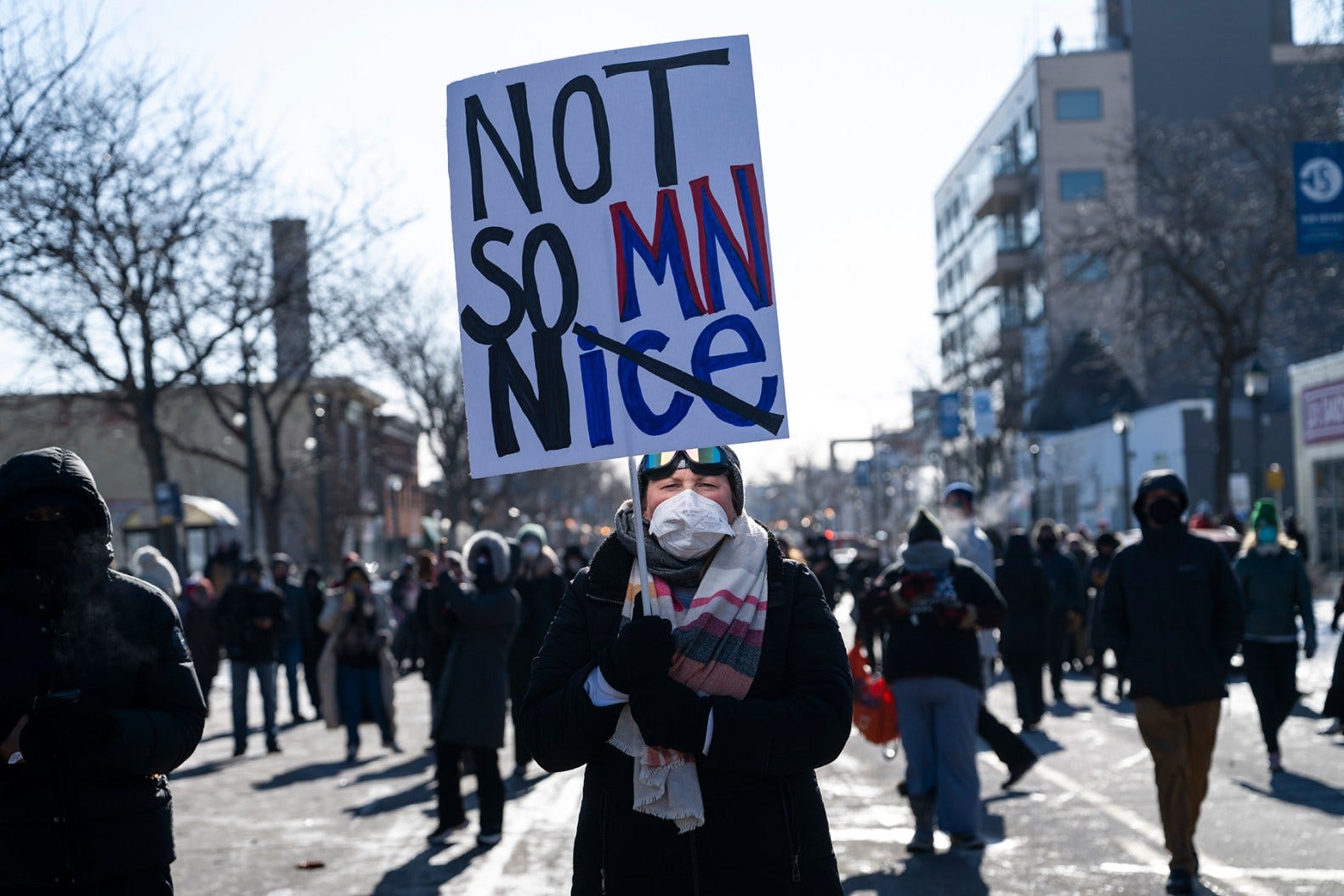
Over the course of this week, I kept encountering an unease expressed by people who don’t usually agree or even notice the same things. None sounded hysterical or triumphant; what they shared was harder to pin down: a sense that public life is coming loose.
Here’s how the progression went:
On Sunday, I read a friend’s Facebook post—equal parts frustration and alarm—reacting to events in Minneapolis, where an encounter involving ICE agents ended with the death of an American citizen.
“We’ve got to figure out how to manage law enforcement, protests, and combinations of the above. We look like a third world country to the rest of the world.”
While the basic facts remain contested (which is itself part of the problem), the results have been more anger, confusion, and chaos.
On Monday, I read Peter Leithart’s article in First Things. His final paragraph:
“We’re no longer governed by laws or prudential statesmen. We have government by tweet, a politics of spectacle and partisan narrative. Public officials of both parties have the means and every incentive to post hot takes that stir up the friend-base and rile the enemy…It will take a miracle to pluck us from the flames we’re stoking up for ourselves.”
There it was again: a sense that we are losing the capacity for self-government, not just politically, but morally and rhetorically.
Also on Monday, while running an errand, I heard a national radio host share his observations in his opening monologue:
“For a long time, we treated political violence like a weather event: rare, localized, tragic—then over. But law enforcement and researchers have been warning for years about a mindset that is different from normal extremism. It’s not ‘I want my side to win.’ It’s ‘I want the system to break.’ This mindset has a name: accelerationism.”
Self-inflicted damage—not accidental, but strategic. As Alfred Pennyworth told Bruce Wayne in The Dark Knight, “Some men just want to watch the world burn.”
Then, on Wednesday, public theologian Brian Mattson succinctly summarized what he (and I) believe is the real culprit: truth has stumbled in the public square. But not only truth as “the opposite of falsehood,” but also what Francis Schaeffer called “true Truth”—truth corresponding to reality rather than cultural consensus—seems to have left the building. Mattson writes:
“I lament the loss of life and the complex perfect storm of circumstances that has brought it about. But I lament even more that Isaiah 59 reads like an Op-Ed published today. The whole chapter is worth reading and meditating upon, but this bit stands out to me:
‘Our offenses are ever with us, and we acknowledge our iniquities: rebellion and treachery against the LORD, turning our backs on our God, fomenting oppression and revolt, uttering lies our hearts have conceived. So justice is driven back, and righteousness stands at a distance; truth has stumbled in the streets, honesty cannot enter. Truth is nowhere to be found, and whoever shuns evil becomes a prey.’” Isaiah 59:12-15a
All of this has left many of us standing around scratching our heads trying to make sense of what is happening, who we can trust to give us the straight story, why it is happening, and how it can be fixed (if indeed it can be fixed at all).
Here’s my take on those four questions.
What Is Actually Happening? (And What Isn’t)
What has unfolded in Minneapolis over the past several weeks is not a single isolated event, but a collision of competing narratives, institutional power, and public reaction, each amplifying the other until the very notion of shared truth seems one of the first casualties.
Fraud Allegations
Allegations of fraud involving Somali-linked childcare and social service providers sparked the surge and quickly became contested. Some framed it as long-overdue accountability for misuse of public funds; others saw it as selective enforcement targeting a marginalized community. These divisions helped widen distrust before enforcement had even begun.1
Federal Response
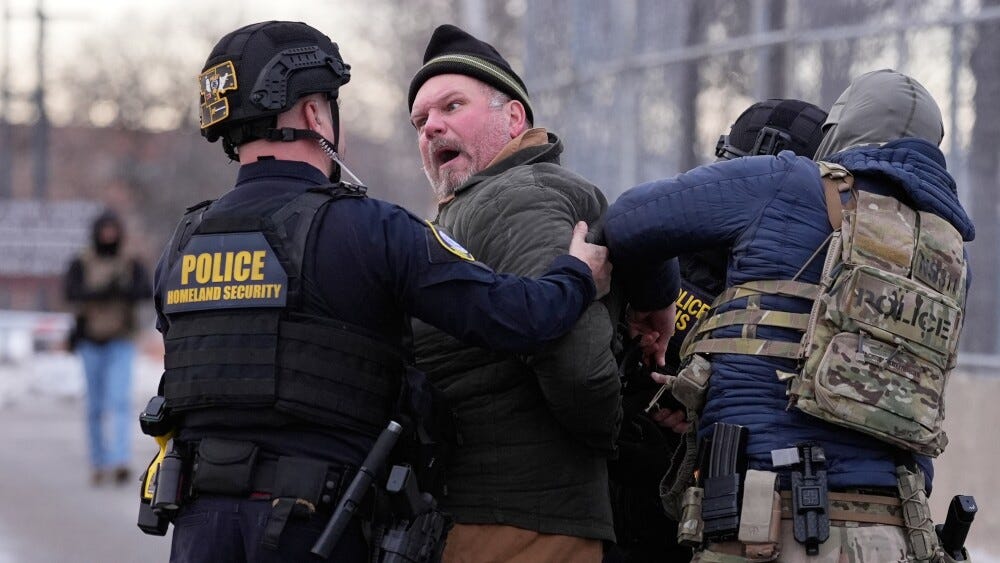
The Department of Homeland Security and U.S. Immigration and Customs Enforcement (ICE) deployed thousands of agents in and around Minneapolis and St. Paul in what officials described as a crackdown on fraud, criminality, and illegal immigration. This was billed by federal authorities as the largest immigration enforcement effort ever undertaken in a U.S. city.
Almost immediately, mass protests followed. Tens of thousands of residents, clergy, unions, and community groups took to the streets to demand that ICE leave Minnesota and that federal enforcement be held to account.2
Deaths
The situation turned more explosive after two fatal shootings by federal agents:
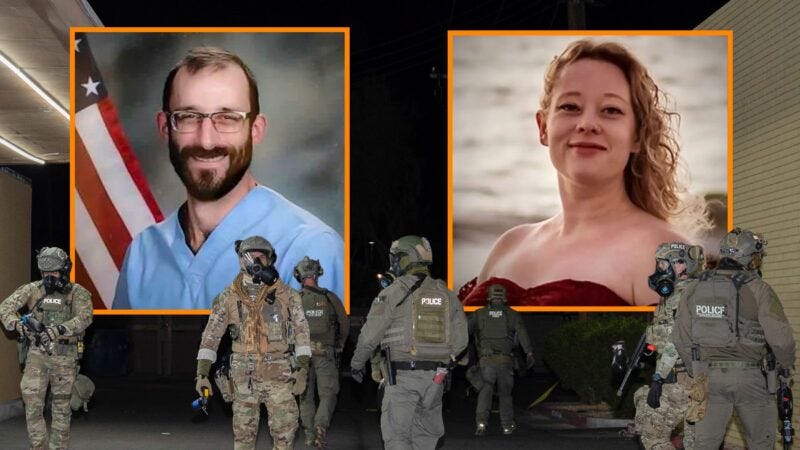
On January 7, 2026, 37-year-old Renée Good, a mother and American citizen, was shot and killed during an ICE enforcement action in Minneapolis.3
On January 24, 2026, 37-year-old Alex Pretti, an ICU nurse and U.S. citizen, was fatally shot by ICE agents during a protest. Video captured by bystanders appears to show Pretti using his phone and not posing an immediate threat, despite claims by officials that he posed a lethal threat.4
Before the hashtags and press releases, there were two people: a mother and a nurse. Whatever else is true of the contested videos and conflicting reports, the state’s use of lethal force ended their stories before the facts could be gathered.
Competing Narratives
These deaths became flashpoints for both sides in the larger narrative battles:
Federal officials defended the actions of agents and, in some cases, early characterizations by administration figures described Pretti and Good in militarized, threatening terms before thorough investigation were completed.
Local leaders and protest organizers rejected these claims, sharing video and eyewitness accounts that contradicted official statements and portraying both killings as examples of reckless federal overreach.
Legal conflicts magnified the tensions. Minnesota’s Attorney General, along with the cities of Minneapolis and St. Paul, filed a federal lawsuit alleging that Operation Metro Surge is unconstitutional and violates multiple federal and state rights protections, including wrongful detention and excessive force.5
Federal courts intervened on January 30, when U.S. District Judge Katherine Menendez ordered a preliminary injunction restricting immigration agents from retaliating against peaceful protesters or using force absent probable cause, though an appeals court temporarily stayed parts of that order.6
Adding to the complexity, local officials in Minnesota including Governor Tim Walz and Minneapolis Mayor Jacob Frey have been subpoenaed by the FBI as part of a federal investigation into whether their public criticism of ICE and actions have hampered enforcement operations.7
Throughout the escalation, competing stories proliferated. Viral news agencies and social posts claimed a five-year-old child was “taken as bait” by ICE, a narrative that spread and was amplified by protest organizers and is still told from two significantly different perspectives.8

What united these and other developments wasn’t just disagreement over policy but the way facts themselves became contested territory. Federal leaders, local officials, protest groups, and media outlets offered radically different accounts of the same events. Videos circulated without context, statements from authorities were issued before investigations concluded, and retractions or corrections (if any were made at all) were often buried under newer headlines.
In this ecosystem, narrative dominance often precedes verification. Within days, Americans were no longer debating policies or even actions; they were inhabiting entirely different realities. In one version, federal agents were restoring order: enforcing the law against corruption, illegal activity, and public disorder. In another, they were an occupying force, lying with impunity and killing citizens to intimidate dissent.
The same split appeared in how the protests were described. In one telling, demonstrators were engaged citizens—grieving, angry, and desperate to hold powerful institutions accountable in the face of corruption, secrecy, and abuse. In another, they were coordinated agitators—shielding fraud, amplifying falsehoods, and deliberately provoking confrontation to destabilize the system itself.
The uncomfortable reality? All four accounts are more than a little true, less than a little false. Each account could point to real images, real people, and real events, and each dismissed the other not merely as mistaken, but as morally corrupt. Each side marshaled selective facts, video clips, legal claims, and moral language to reinforce its view, dismissing the other as either malicious or delusional.
This is where the deeper problem emerges. When events accelerate faster than truth can be established, and when institutions once tasked with adjudicating reality are openly distrusted or openly partisan, the question is no longer simply what happened? The pressing question becomes: who do we trust to tell us?
Who Can Be Trusted? (And Why Is That Question So Hard Now?)
In a well-functioning society, we rely on institutions—law enforcement, courts, local and federal officials, and credible media—to establish facts, adjudicate disputes, and enforce consequences. When those institutions are themselves contested, or perceived as partial, the entire foundation of shared reality begins to crumble. This is what the majority of the nation has felt in recent days.
Federal agencies released statements and defended their agents’ actions, sometimes before full investigations were completed. Local officials critiqued the same operations, highlighting video evidence, eyewitness accounts, and legal concerns. Media outlets, often aligned with partisan audiences, amplified one version or the other—or both simultaneously—adding context for some readers while omitting it for others. Meanwhile, social media accelerated every claim, rumor, and reinterpretation, creating echo chambers in real time.
The effect is twofold:
Competing views harden into certainty. One person sees federal enforcement as lawful and necessary; another sees occupation and overreach. Likewise, one person sees protestors as exercising noble civic engagement and calling for accountability, but another sees them spreading misinformation, amplifying unverified claims, and escalating confrontation deliberately. Both sides interpret the same videos, news clips, and statements through their ideological lens. Both are, in a sense, correct based on selective perception, but both are also misled by partial truths, assumptions, and strategic exaggeration. This is not mere misunderstanding; it is the collapse of a shared narrative framework, in which fact and motive are filtered through conviction rather than verification.
Acceleration shapes behavior as strategy. When viral dissemination is prioritized over verification, speed itself becomes a weapon. Protest organizers, federal agencies, and media personalities alike operate under incentives that reward rapid amplification of a particular version of reality. Every misstatement, every ambiguous clip, and every preemptive judgment fuels the acceleration cycle. This is not always conscious, but it is consistent: the faster a narrative spreads, the more entrenched it becomes, regardless of its factual basis.
Take Renée Good, for example. Federal accounts described her as an aggressive threat, while protestors framed her as a mother and community advocate. Or consider Alex Pretti. Initial video footage shows him filming during the protest and being shot, while newly released (and independently verified by multiple news outlets) video appears to portray a radicalized actor intent on confrontation.
Amid all this, the ordinary citizen is left in a nearly impossible position. Who can we trust to deliver reliable information? And even more, whose moral judgment should we defer to when institutions—historically tasked with safeguarding both law and truth—appear deeply compromised or selectively applied?
The answer requires a difficult, twofold commitment: while we must hold protestors to the standard of truth, we must hold the state to the standard of life.
Some turn to personal networks or community leaders for guidance. Others retreat, relying on prayer, meditation, or silence to preserve moral clarity. Both approaches are rational adaptations to an environment where truth is contested, accelerated, and weaponized.
But the challenge extends beyond Minneapolis. The fractures we see in this microcosm reflect a broader societal problem: when competing narratives dominate faster than facts can be verified, the authority of truth erodes, and public life becomes a theater of suspicion. Decisions are made on partial information, allegiances harden, and moral reasoning itself is distorted by the rapid churn of competing stories.
For those trying to navigate this environment faithfully, the question is not simply who is right? or who has more power? It is how can I discern, act, and speak in a way that honors reality, justice, and the moral order, even when institutions fail and lies are amplified?
Minneapolis offers a stark case study: a convergence of federal authority, community resistance, media amplification, and social media virality. In such conditions, trust is no longer a default assumption. It becomes an active choice, disciplined by patience, verification, and a willingness to confront complexity without yielding to simplistic narratives or moral pretense.
Why Is This Happening? (The Breakdown Before the Breakdown)
Understanding how Minneapolis happened requires asking why it happened—not just proximately, but at a deeper level. When events like these unfold, our initial instinct is to ask who is responsible? and what should be done? But the more searching question is older and harder: why does this keep happening? Not in one city or moment, but across cultures, centuries, and regimes? Why do fear and suspicion metastasize into certainty? Why does moral outrage slide into justification, and justification into dehumanization?
Long before the cameras arrive and long after they leave, the raw material is already present in us: a readiness to divide the world into the righteous and the dangerous, the innocent and the guilty, the saved and the expendable. These moments do not create something new; they expose what has been waiting for the right conditions to surface.
Isaiah 59 gives language to this condition with unnerving clarity, not as a commentary on a single regime or scandal, but as a portrait of what happens when truth loses its footing among a people. The chapter opens not with God’s absence, but with human rupture:
“Behold, the Lord’s hand is not shortened, that it cannot save,
or his ear dull, that it cannot hear;
but your iniquities have made a separation
between you and your God,
and your sins have hidden his face from you
so that he does not hear.”
—Isaiah 59:1-2
The problem is not that God cannot act; it is that we have disordered the moral ecosystem and God will not be mocked; we will reap what we have sown, and even still, a greater reckoning is coming at the hands of the Righteous Judge.
What is striking is how comprehensive the breakdown is. Violence is normalized. Speech is weaponized. Justice is no longer something discovered or upheld, but something manufactured to serve power, tribe, or fear. Isaiah does not describe a society lacking passion or conviction. Quite the opposite. Hands are “defiled with blood,” fingers “with iniquity.” Lips speak lies; tongues mutter injustice. People run eagerly toward wrongdoing, not reluctantly.
This is not apathy; it is moral energy untethered from reality. And the most dangerous stage of decline? When zeal remains strong and truth has gone missing, restraint looks like weakness, nuance like complicity, and refusal to play along is treated as betrayal.
If this diagnosis is even partly true, then the danger is not only “out there,” in institutions or movements we oppose, but in the habits of mind and heart we bring with us into every controversy. The collapse Isaiah describes does not begin with mobs or mandates; it begins when truth is treated as expendable in the service of what feels urgent or righteous.
That means the most pressing question is no longer how society should respond, but how should we? What does our—my—faithfulness require when premature certainty is rewarded, quiet restraint is mocked, and truth itself carries a cost?
Living Truthfully When Truth Costs (How Then Should We Live?)
Faithfulness in a moment like this is not about the right take, the quickest response, or the loudest voice. It begins with refusing to sacrifice truth for urgency, or righteousness for relevance. It means resisting the pressure to speak before we know, to judge before we understand, or to align before we have discerned. The call is not first to fix the chaos, but to inhabit it truthfully.
If truth has stumbled in the streets, then faithfulness cannot consist merely in choosing a side or amplifying the loudest outrage. We see this when protesters are described as terrorists before investigation, when federal agents are called murderers before trials, or when complexity is dismissed as complicity by both sides. No, faithfulness must consist in bearing witness—clearly, patiently, credibly—since confusion benefits everyone who would rather not be held to account.
This means saying plainly that federal authorities, having failed the standard of life, have also made the standard of truth nearly impossible to maintain. Rhetoric has raced ahead of investigation. Force has been justified prematurely. Public trust has been strained rather than preserved. Those realities deserve scrutiny, restraint, and reform.
But it also means saying that much of the protest response has followed the same downward logic. Blocking operations, escalating confrontations, spreading unverified claims, and collapsing moral distinctions may feel righteous in the moment, but they ultimately blur the very contrast that makes injustice visible. When protest mirrors—rather than contrasts with—the disorder it opposes, the result is not clarity but confusion.
This is where the civil rights movement of the 1950s and 60s still instructs us, not because it was perfect, but because its leaders (who also were not perfect) understood something many modern movements have forgotten. Martin Luther King Jr. grasped that the power of nonviolence was not moral purity, but moral contrast. By refusing to match the violence, chaos, and cruelty of segregationist authorities, protestors kept the spotlight where it belonged. The question was no longer who started it? but who is behaving unjustly?
King’s insight was strategic and ethical at the same time: overreaction to oppression often ends up protecting the oppressor. Restraint, discipline, and visible dignity make lies harder to sustain. By contrast, when protests obstruct lawful processes, escalate tensions, or adopt the posture of permanent emergency, the average observer watching from a distance struggles to tell the difference between authority misused and resistance undisciplined. The lines blur. Trust erodes. Truth suffers.
Imagine a different posture: protestors present in large numbers—calm, quiet, unmistakable. Phones documenting everything. No obstruction. No escalation. No theatrics. Simply witness. In that scenario, every misuse of force would stand out in high relief. Every false statement would collapse under evidence. The contrast would do the moral work.
Some will object that the deportations themselves are unjust and thus any resistance is justified. But even here, reality intrudes. A broad two-thirds majority of Americans—including under previous Democratic administrations9—have affirmed the legitimacy of illegal immigration enforcement.10 That doesn’t sanctify every action taken in its name, but it does mean that persuasion, not provocation, is required if hearts and minds are to be changed.
Faithfulness in this moment does not mean gag orders, retreat, or cynicism. It does mean refusing to sacrifice truth for speed, clarity for outrage, witness for applause. And it does mean understanding that how we respond becomes part of what we reveal.
If Isaiah is right and truth has indeed stumbled, then our calling should not be to add to the pileup, but to help it stand again. Granted, that kind of faithfulness feels slower, quieter, less satisfying in the moment. But it is the only posture capable of exposing injustice without becoming indistinguishable from it.
“The Lord saw it, and it displeased him
that there was no justice.
He saw that there was no man,
and wondered that there was no one to intercede;
then his own arm brought him salvation,
and his righteousness upheld him.”
—Isaiah 59:15b-16

Coverage of these protests, their scale, and the broad coalition involved can be found at https://www.theguardian.com/us-news/2026/jan/23/minnesota-economic-blackout-ice-protests and https://time.com/7357523/minnesota-ice-protest-business-immigration-minneapolis/
See the official lawsuit text and claims at https://www.ag.state.mn.us/Office/Communications/2026/01/12_ICE.asp
So well written Craig, thank you for taking the time to sort through the mess of our thoughts and consideration of possible responses. These two statements you made really resonated with me "...fact and motive are filtered through conviction rather than verification" and "...understanding that how we respond becomes part of what we reveal." My mind immediately jumped to "how we respond becomes part of what we REVERE." In our Western culture, the Self and all its attendant items of worship take center stage: I need to be right, I am right, I'll sacrifice all to prove that I am right. Without God, I cannot admit that I am/could be wrong about something...anything. My worth and identity is wrapped up in whatever emotion I'm feeling at the moment. And of course it's correct. And true. And RIGHT. Our inability and unwillingness to consider another viewpoint reigns supreme. A faithful response just takes too long, too many cycles, too much thinking. Thank you for the brilliant connection and lesson from history with MLK: nonviolence is not passivism; the opposite reaction reveals the wrongness in all its stunning wickedness. Be morally outraged, yes; but don't respond in kind. Easy to say, much harder to do. (We just watched Nuremberg, I'm doubtful I could've been a prison guard with 20 Nazi High Command officers on my watch).
This is well stated. It certainly leaves me wondering how one can get enough truthful evidence on events of our day to be able to take a stand that is not either 1) falling into the trap one distorted side or the other, or 2) being so non-committal that no stance is taken at all.